10-minute chair stretches for a desk-work break
When you have been in the same position for a while, this sequence moves the neck, back, chest, buttocks and backs of the thighs in turn without leaving your seat.
- About 10 min · 6 exercises
- Work or home (chair)
- A stable chair
Suitable for: Everyone
Opens step 1 in the 3D studio. Come back here and use “Next” to move to each following step.
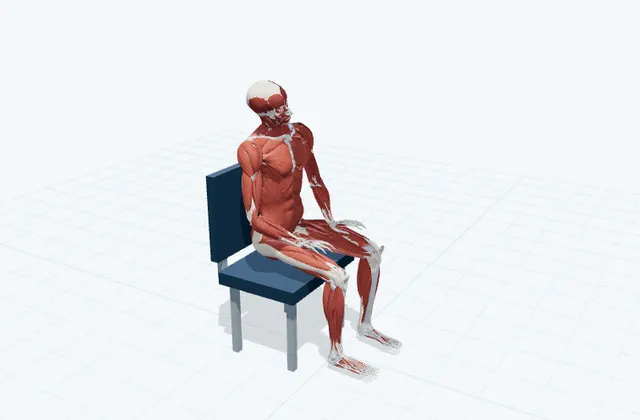 1 · about 1.5 min
Neck Side Stretch
Keeping the shoulders down, slowly tilt the head to the side. Both sides.
Next: Seated Upper-Body Twist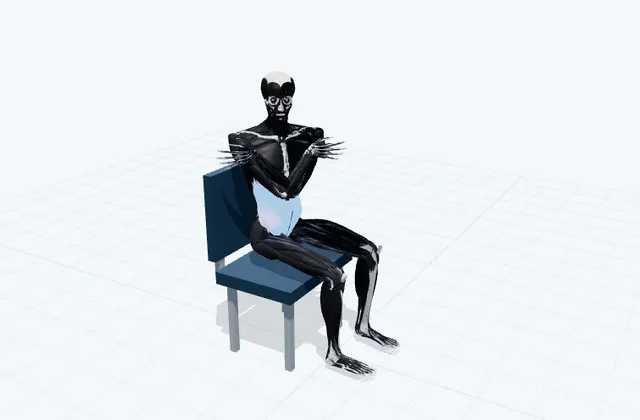 2 · about 1.5 min
Seated Upper-Body Twist
Keep the pelvis on the seat and rotate from the chest. Both sides.
Next: Seated Side Bend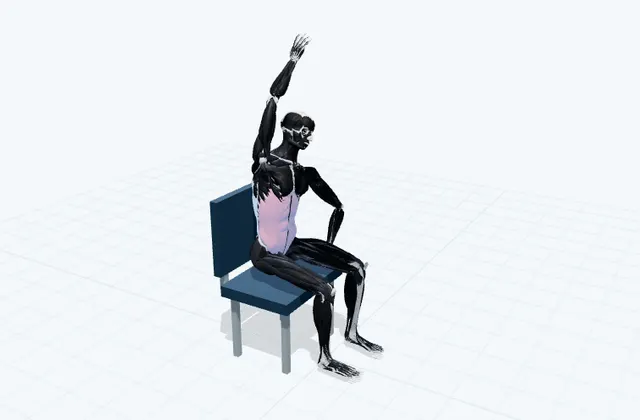 3 · about 1.5 min
Seated Side Bend
Press the sitting bones into the seat and lengthen the side of the body.
Next: Seated Chest Stretch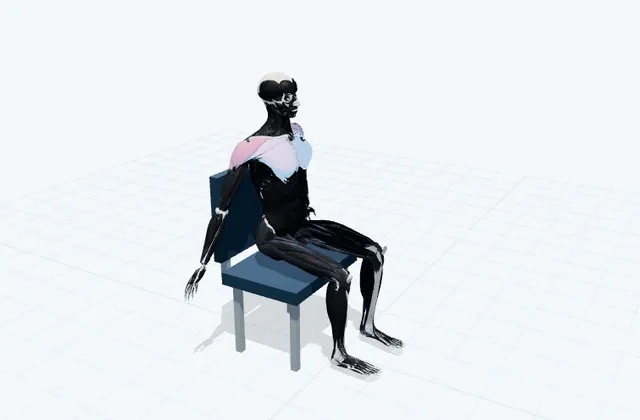 4 · about 2 min
Seated Chest Stretch
Open the front of the chest and stop where the shoulders do not hunch.
Next: Seated Figure-Four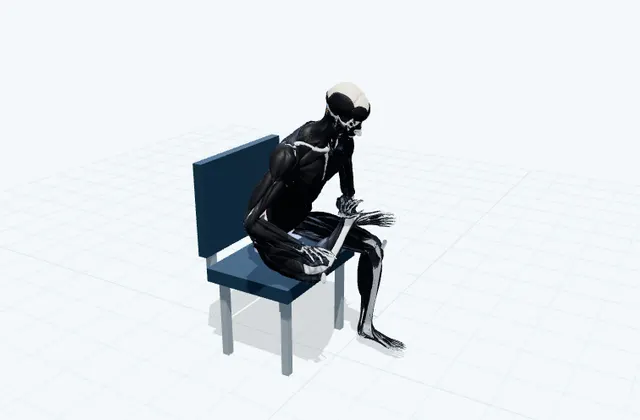 5 · about 1.5 min
Seated Figure-Four
Without rounding the back, lean forward only a little. Both sides.
Next: Seated Hamstring Stretch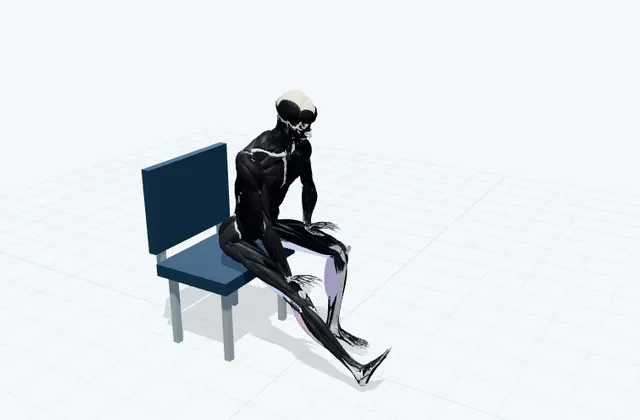 6 · about 2 min
Seated Hamstring Stretch
With the toes pointing up, lean forward while keeping the back long. Both sides.
Points to keep in mind
- Avoid chairs on castors, and sit on the front half of the seat.
- Skip any movement that brings on pain or numbness. Spending less time in one position is important too.
About this programme
Times are a rough guide and do not set a number of repetitions or an intensity. The 3D is a schematic model for checking movement. If you have pain, numbness or concerns about your health, do not do these; speak to a doctor or other healthcare professional, or your instructor.
Sources, review and revision policy