12-minute leg stretches after walking
For days when you have walked a lot, this sequence stretches the calves, the front and back of the thighs, the front of the hips and the buttocks in turn.
- About 12 min · 6 exercises
- Home (wall and floor)
- Wall, low step, mat and cushion
Suitable for: Everyone
Opens step 1 in the 3D studio. Come back here and use “Next” to move to each following step.
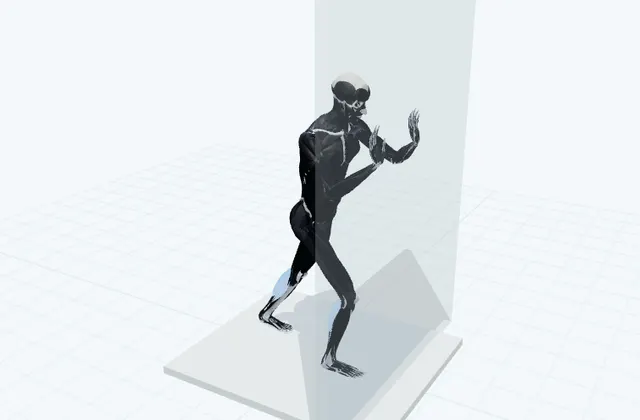 1 · about 2 min
Wall Calf Stretch
Keep the back heel on the floor. Both sides.
Next: Bent-Knee Calf Stretch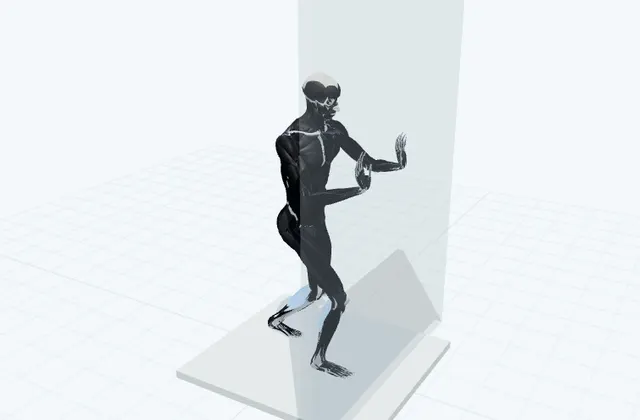 2 · about 2 min
Bent-Knee Calf Stretch
Bend the knee to stretch the lower part of the calf. Both sides.
Next: Supported Standing Quadriceps Stretch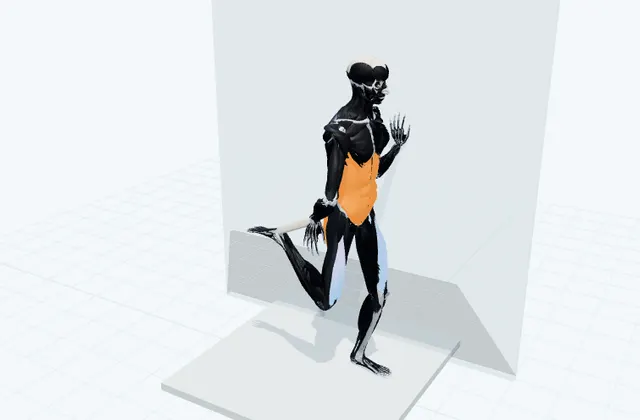 3 · about 2 min
Supported Standing Quadriceps Stretch
With a hand on the wall, keep the knee pointing down. Both sides.
Next: Standing Hamstring Stretch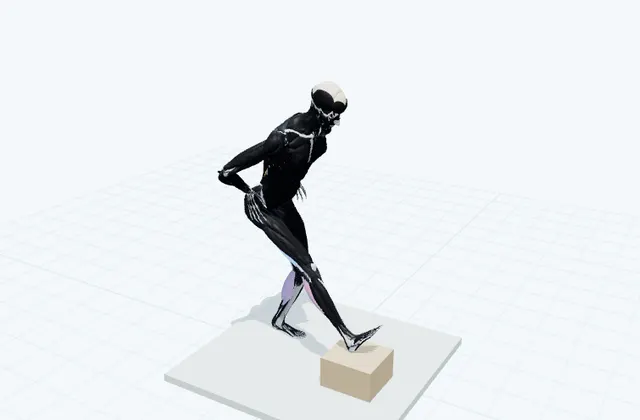 4 · about 2 min
Standing Hamstring Stretch
Rest the heel on a low step and keep the back long. Both sides.
Next: Half-Kneeling Hip Flexor Stretch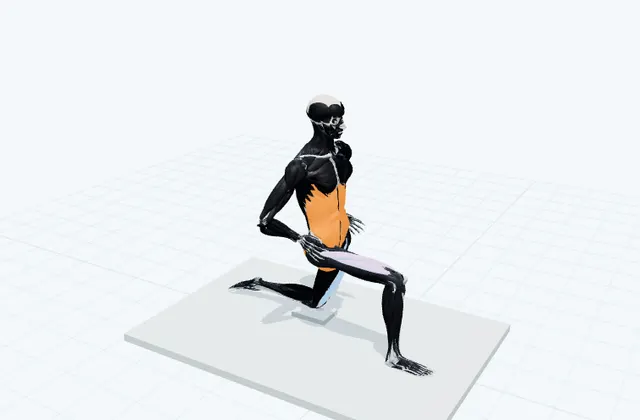 5 · about 2 min
Half-Kneeling Hip Flexor Stretch
Put a cushion under the knee and tilt the pelvis backwards. Both sides.
Next: Supine Figure-Four Stretch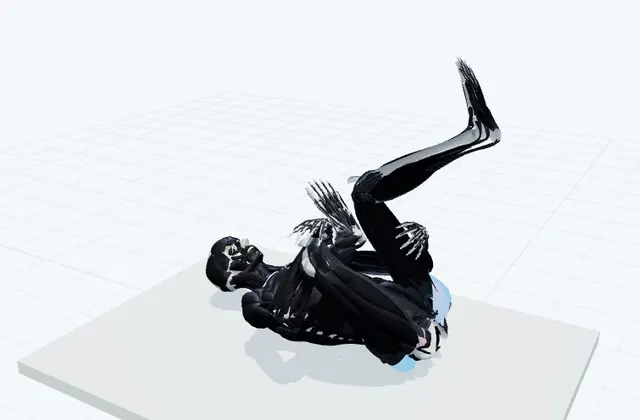 6 · about 2 min
Supine Figure-Four Stretch
Lying on your back, stop where you feel the stretch deep in the buttock. Both sides.
Points to keep in mind
- If your legs feel heavy straight after walking, start with a smaller range.
- Keep breathing while you stretch.
About this programme
Times are a rough guide and do not set a number of repetitions or an intensity. The 3D is a schematic model for checking movement. If you have pain, numbness or concerns about your health, do not do these; speak to a doctor or other healthcare professional, or your instructor.
Sources, review and revision policy