Seated Hands-Behind Chest Opener
Seated (chair) · Chest and front of the shoulder
A self-stretch for the chest and front of the shoulder. Support your body and stay within a comfortable range.
How longNew to it: start with 10–20 seconds, once or twice. Used to it: 20–30 seconds, 2–4 times, about 60 seconds in total per stretch.How long and how many →
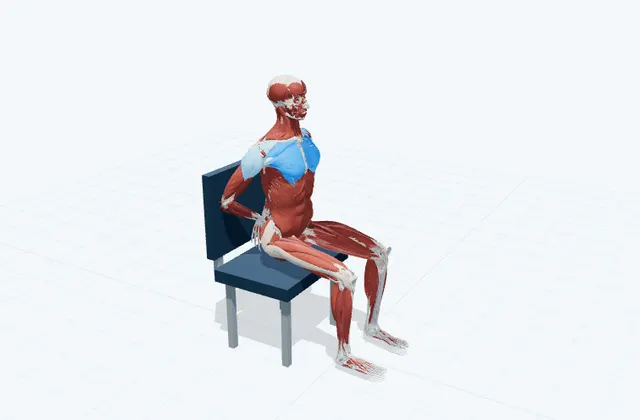
Position and focus
Seated (chair) · Chest and front of the shoulder
Starting position
Sit towards the front of a chair and clasp your hands behind your back at waist height.
Movement phases
1. Clasp the hands behind you
Without leaning on the backrest, lengthen your back.
2. Open the chest
As you reach your clasped hands down and away, draw your shoulders back and lift your chest.
3. Hold the stretch
Breathe where you feel a stretch from the chest to the front of the shoulders.
4. Return
Release your hands and return your arms to your sides.
What to check yourself
Check that you are not arching your lower back and that your shoulders are not hunched.
Adjust the stretch
Easier: Place both hands behind you on the seat instead of clasping them.
Deeper: Keeping the hands clasped, move the arms a little away from the body.
Caution
Stop if you feel sharp pain, numbness, dizziness, shortness of breath or anxiety. If you are receiving treatment, recovering from surgery or pregnant, check with your healthcare professional first.
These English notes describe a prototype model. The stretch, foam roller and resistance band lessons are being produced under the supervision of CoconeRu. Move, reviewed in stages. They are not medical advice or an individual exercise prescription.
References
This lesson was put together for this site. It has not yet been reviewed by an expert.
About this page
It shows a typical way to do the movement. The 3D is a schematic model; it does not decide whether a lesson suits you, prescribe exercise or diagnose anything. Stop if you feel pain or discomfort.
Sources, supervision and revisions