Double Knee-to-Chest
Supine · Glutes and lower back
A self-stretch for the glutes and lower back. Support your body and stay within a comfortable range.
How longNew to it: start with 10–20 seconds, once or twice. Used to it: 20–30 seconds, 2–4 times, about 60 seconds in total per stretch.How long and how many →
Position and focus
Supine · Glutes and lower back
Starting position
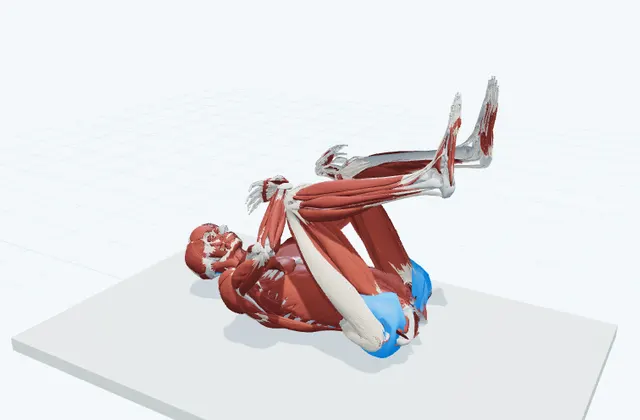
Lie on your back with both knees bent and hold each knee with the hand on the same side.
Movement phases
1. Hold both knees
Relax your head and shoulders.
2. Draw towards the chest
Slowly draw both knees towards your chest.
3. Hold the stretch
Breathe where you feel a stretch around the lower back.
4. Lower the legs
Return the soles of the feet to the floor one leg at a time.
What to check yourself
Check that you are not bouncing and that there is no tension in your neck or shoulders.
Adjust the stretch
Easier: Hold behind the knees and stop with them further from the chest.
Deeper: Draw both knees a little closer to the chest.
Caution
Stop if you feel sharp pain, numbness, dizziness, shortness of breath or anxiety. If you are receiving treatment, recovering from surgery or pregnant, check with your healthcare professional first.
These English notes describe a prototype model. The stretch, foam roller and resistance band lessons are being produced under the supervision of CoconeRu. Move, reviewed in stages. They are not medical advice or an individual exercise prescription.
References
Each note describes what the whole source covers.
Worcestershire Acute Hospitals NHS — Stretching Exercises (Physiotherapy) ↗
Self-stretches for the neck, shoulder, elbow and wrist; knee rolls and knee hugs lying down; inner thigh; lifting the chest lying face down; front of the hip at the edge of a bed; front and back of the thigh; and calf.
AAOS OrthoInfo — Hip Conditioning Program ↗
Crossing the legs beside a wall to stretch the outer hip, bringing the knee(s) towards the chest (one or both legs), and the back of the thigh lying down (with a towel if the hands do not reach).
About this page
It shows a typical way to do the movement. The 3D is a schematic model; it does not decide whether a lesson suits you, prescribe exercise or diagnose anything. Stop if you feel pain or discomfort.
Sources, supervision and revisions