Adductor Rock Back
All fours · Inner thigh
A dynamic stretch for the inner thigh, moving through a gradually larger range. It can also be used as part of a warm-up.
How longNew to it: 5–10 small movements. Used to it: 10–15 movements, growing a little at a time.How long and how many →
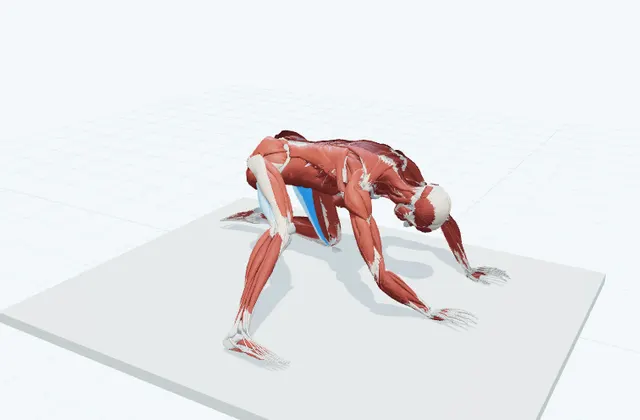
Position and focus
All fours · Inner thigh
Starting position
From all fours, stretch the right leg out to the side with the sole of the foot on the floor.
Movement phases
1. Set up
Keep the left knee under the hip and the back flat.
2. Small rocks
Keeping the hands down, rock the hips back and forwards again.
3. Larger rocks
Within a comfortable stretch in the right inner thigh, rock further back.
4. Smaller and stop
Make the movement smaller, bring the leg back and stop.
What to check yourself
Check that the knee and toes of the leg out to the side keep pointing forwards (towards the hands) and that the lower back does not round too much.
Adjust the stretch
Easier: Place the foot of the leg out to the side closer to the body.
Deeper: Place the leg out to the side a little further away.
Caution
Stop if you feel sharp pain, numbness, dizziness, shortness of breath or anxiety. If you are receiving treatment, recovering from surgery or pregnant, check with your healthcare professional first.
These English notes describe a prototype model. The stretch, foam roller and resistance band lessons are being produced under the supervision of CoconeRu. Move, reviewed in stages. They are not medical advice or an individual exercise prescription.
References
Each note describes what the whole source covers.
Behm DG et al. Acute effects of muscle stretching on physical performance, range of motion, and injury incidence in healthy active individuals: a systematic review. Appl Physiol Nutr Metab. 2016 ↗
A review comparing the immediate effects of static, dynamic and PNF stretching: long static holds can slightly reduce performance straight afterwards, while short static or PNF stretches can still be part of a warm-up combined with dynamic activity.
About this page
It shows a typical way to do the movement. The 3D is a schematic model; it does not decide whether a lesson suits you, prescribe exercise or diagnose anything. Stop if you feel pain or discomfort.
Sources, supervision and revisions