Deep Squat Hold
Standing · Hips, inner thighs and ankles
A self-stretch for the hips, inner thighs and ankles. Support your body and stay within a comfortable range.
How longNew to it: start with 10–20 seconds, once or twice. Used to it: 20–30 seconds, 2–4 times, about 60 seconds in total per stretch.How long and how many →
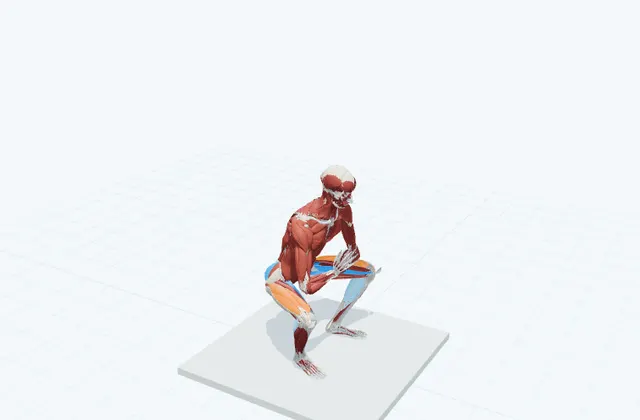
Position and focus
Standing · Hips, inner thighs and ankles
Starting position
Stand with the feet a little wider than the hips and the toes turned slightly out. Press the palms together in front of the chest.
Movement phases
1. Get ready
Put your weight over the heels and lift the chest.
2. Squat down
Keeping the heels on the floor, lower the hips as far as is comfortable.
3. Hold the position
Ease the knees apart lightly with the elbows and feel the stretch in the hips and inner thighs.
4. Stand up
Push the floor away and stand up slowly.
What to check yourself
Check that the heels stay down and the knees point the same way as the toes.
Adjust the stretch
Easier: Squat only as low as a low stool placed behind you.
Deeper: Staying low, reach one arm at a time towards the ceiling.
Caution
Stop if you feel sharp pain, numbness, dizziness, shortness of breath or anxiety. If you are receiving treatment, recovering from surgery or pregnant, check with your healthcare professional first. If your knees or hips hurt, squat less deeply or squat down onto a low stool.
These English notes describe a prototype model. The stretch, foam roller and resistance band lessons are being produced under the supervision of CoconeRu. Move, reviewed in stages. They are not medical advice or an individual exercise prescription.
References
This lesson was put together for this site. It has not yet been reviewed by an expert.
About this page
It shows a typical way to do the movement. The 3D is a schematic model; it does not decide whether a lesson suits you, prescribe exercise or diagnose anything. Stop if you feel pain or discomfort.
Sources, supervision and revisions