Glute Rolling
Sitting on the roller (one leg crossed) · Feeling of tightness in the buttocks (gluteal muscles)
Feeling of tightness in the buttocks (gluteal muscles)
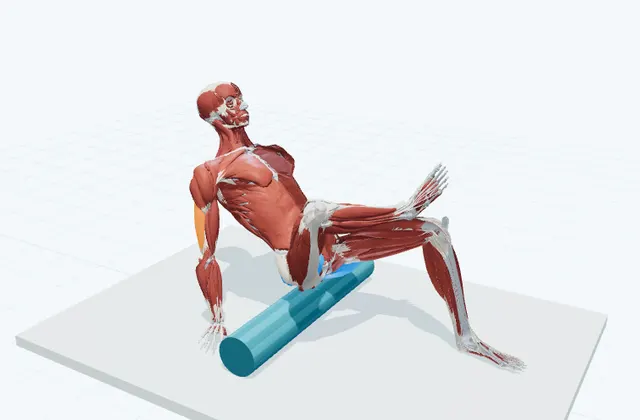
Position and focus
Sitting on the roller (one leg crossed) · Feeling of tightness in the buttocks (gluteal muscles)
Starting position
Place the roller across and sit on it. Rest your right ankle on your left knee, and place both hands on the floor behind you for support.
Movement phases
1. Set up
Lean slightly to the right and bring your right buttock onto the roller.
2. Roll back and forth
Supporting yourself with your hands and left foot, move your body forwards and backwards in small movements.
3. Return to start
At the same speed, come back to the starting position.
4. Lower and rest
Lower your leg and rest. Repeat on the other side.
What to check yourself
Is there pain in the knee or hip of the crossed leg? Is too much weight going onto the wrists?
Coaching points for trainers
If crossing the leg is uncomfortable, keep the foot on the floor and simply lean the body. The 3D view shows the right buttock.
Caution
Do not press hard through pain. Stop if you feel sharp pain, numbness or dizziness. If you have osteoporosis, pain under treatment, have had surgery or are pregnant, check with your healthcare professional. If you have pain in your hip or knee, do this without crossing your leg.
These English notes describe a prototype model. The stretch, foam roller and resistance band lessons are being produced under the supervision of CoconeRu. Move, reviewed in stages. They are not medical advice or an individual exercise prescription.
References
Each note describes what the whole source covers.
Wiewelhove T et al. A Meta-Analysis of the Effects of Foam Rolling on Performance and Recovery. Front Physiol. 2019 ↗
A meta-analysis of foam rolling before and after exercise. Small improvements in flexibility and sprint performance before exercise and reduced muscle soreness after exercise are reported; the effects are small.
This lesson was put together for this site from the methods for the same area in the sources above. It has not yet been reviewed by an expert.
About this page
It shows a typical way to do the movement. The 3D is a schematic model; it does not decide whether a lesson suits you, prescribe exercise or diagnose anything. Stop if you feel pain or discomfort.
Sources, supervision and revisions