Bridge with Heels on the Roller
Supine (heels on the roller) · Lifting the pelvis with the buttocks and the back of the thighs
Lifting the pelvis with the buttocks and the back of the thighs
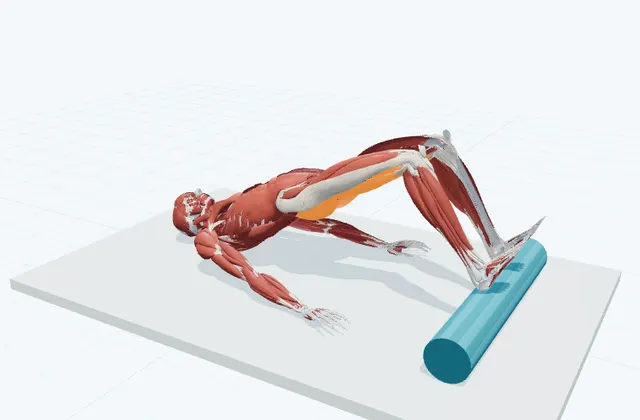
Position and focus
Supine (heels on the roller) · Lifting the pelvis with the buttocks and the back of the thighs
Starting position
Lie on your back with the roller placed across and both heels on it. Bend your knees and place your arms on the floor beside your body.
Movement phases
1. Set up
Press lightly into the roller with your heels and find a position where it does not roll.
2. Lift the pelvis
Breathing out, curl the tailbone up (tilt the pelvis backwards) and lift from the buttocks up through the spine in sequence.
3. Hold the position
Bring your knees to shoulders close to a straight line and hold without letting the roller wobble.
4. Lower the spine
Lower the spine from the top down and return the pelvis to the floor.
What to check yourself
Is the roller wobbling or rolling from side to side? Is the lower back arching too much? Are the knees falling inwards?
Coaching points for trainers
If the back of the thighs cramps, bend the knees more and bring the roller closer to the body. The wobble of the roller lets you observe left–right differences in the pelvis.
Caution
Do not press hard through pain. Stop if you feel sharp pain, numbness or dizziness. If you have osteoporosis, pain under treatment, have had surgery or are pregnant, check with your healthcare professional. The roller rolls easily and is unstable. Until you are used to it, keep the lift small.
These English notes describe a prototype model. The stretch, foam roller and resistance band lessons are being produced under the supervision of CoconeRu. Move, reviewed in stages. They are not medical advice or an individual exercise prescription.
References
This lesson was put together for this site. It has not yet been reviewed by an expert.
About this page
It shows a typical way to do the movement. The 3D is a schematic model; it does not decide whether a lesson suits you, prescribe exercise or diagnose anything. Stop if you feel pain or discomfort.
Sources, supervision and revisions